Truck-Mounted Equipment Repair
Keep the Truck and Its Working Equipment Connected
A truck that runs is only part of the job. We repair hydraulic systems, PTO-driven equipment, dump bodies, hoists, controls, and the working equipment your fleet depends on.
Hydraulic System Repair
Hydraulic equipment needs the right supply of fluid, flow, pressure, and control to perform its assigned work. Slow movement, leaks, excessive heat, unusual noise, or a function that stops under load can have different causes. Our repair work considers hoses and connections, pumps, cylinders, valves, reservoirs, filtration, and the controls involved in the affected function.
Tell us which movement is affected and whether the concern changes as the equipment warms up. A pump should not be condemned solely because a body lifts slowly, and a leaking hose should not be treated as the whole problem when movement or control faults remain. Testing and component identification guide the repair scope. Fluid type and service requirements come from the installed system’s documentation.
PTO-Driven Equipment & Power Take-Off Repair
The power take-off connects the truck’s power source to working equipment such as a hydraulic pump. A PTO engagement concern can involve mechanical components, the engagement circuit, controls, or an operating interlock. Report whether the indicator changes, the PTO engages, and the equipment responds; those are separate observations.
We assess the installed PTO, pump, controls, and the equipment they drive together. Include the transmission and PTO identification, any recent repairs, and whether the problem occurs parked or during an approved mobile operating mode. The correct operating procedure depends on the installation. Manufacturer resources such as Muncie’s PTO troubleshooting overview illustrate why the warning lamp alone cannot identify every fault.
Dump Trucks, Dump Bodies & Hoists
Dump equipment service includes the truck and the body’s hydraulic, mechanical, and control systems. Describe a body that will not raise, lowers unevenly, moves slowly, or will not return to its travel position. Include hoist, tailgate, control, and visible mounting concerns in the work order. The chassis VIN and the dump-body or hoist identification help establish the actual installation.
Tell us whether the body is loaded, raised, damaged, or unable to move before arranging transport. Safe access and an appropriate support method must be established before inspection. Do not work beneath an unsupported body or bypass an interlock to demonstrate a fault. After assessment, repair needs can be planned alongside truck service and welding or fabrication work where appropriate.
The Equipment Behind the Truck’s Job
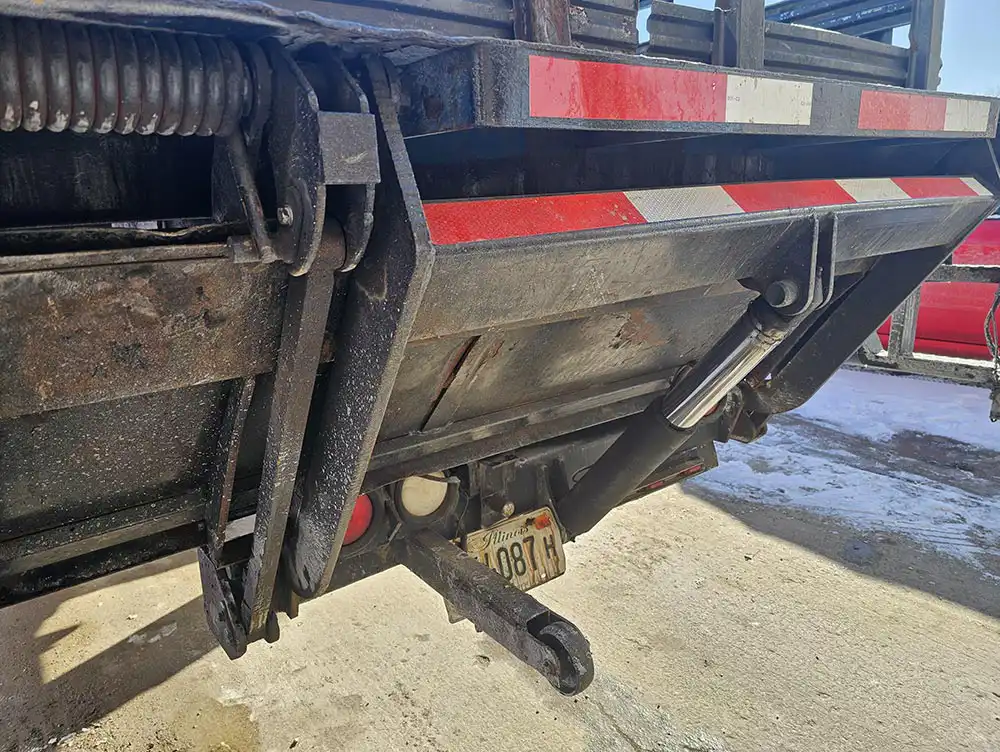
Our scope includes liftgates, service bodies, dump and roll-off equipment, sweepers, spreaders, truck-mounted pumps, and other auxiliary systems. Construction and municipal equipment often combine several manufacturers’ components on one vehicle. Identify the working body and attachment as well as the chassis so a repair request follows the whole system.
For a specialized installation, send the data plates, a description of its function, and the fault. We will discuss access, equipment-specific service information, parts needs, and the work required. Explore street sweeper and municipal equipment service, construction equipment repair, and liftgate repair.
Look at the Complete Installation
-
Power and Controls
Report control behavior, electrical warnings, and changes after battery, wiring, or accessory work.
-
Hydraulic and Mechanical Functions
Describe leaks, movement changes, unusual noises, or an affected direction of operation. Leave the equipment in a safe condition.
-
Body and Mounting Concerns
Provide photos of visible damage and explain the part’s function. Discuss access, material, and the appropriate repair scope.
Prepare for Access and Diagnosis
- Truck VIN plus mounted-equipment make, model, and serial number
- The affected function, control, and operating conditions
- Current position, visible damage, leaks, and access limitations
- Recent installations or repairs and the approval contact
Truck-Mounted Equipment Questions
Do You Repair Hydraulic and PTO Problems?
Does a Slow Dump Body Always Need a New Pump?
Is the Truck VIN Enough to Identify the Equipment?
Can I Include Truck Repairs in the Same Request?
Should I Operate the Equipment to Show the Fault?
Tell Us About Your Working Equipment
Send the truck and equipment details to plan service with Big Rig Fixer in Carol Stream.
- Emergency Service: (630) 520-0103
- Hours: 9a-4:30p Mon-Fri