Diagnostics Updated 3 min read
An intermittent problem is difficult to describe after the truck starts running normally again. A useful diagnostic handoff captures what happened, when it happened, and what changed. You do not need to identify the failed part before contacting the shop. Your observations are the starting point.
Start with the Vehicle and the Symptom
Record the truck’s make, model, year, VIN, mileage, and engine hours if available. For a fleet, include the unit number that dispatch and the shop both recognize. Write the concern in the driver’s words: “The engine cranks slowly after sitting overnight” gives a technician more information than “needs a starter.” Avoid turning a suspected cause into a confirmed diagnosis.
Note whether the symptom happens at startup, at idle, under load, after warming up, or only with a particular trailer attached. Include whether it began suddenly or became more noticeable over several trips. A pattern helps the shop decide what operating conditions to investigate.
Keep the Evidence Intact
- Photograph the warning lights and the exact displayed message when safely parked.
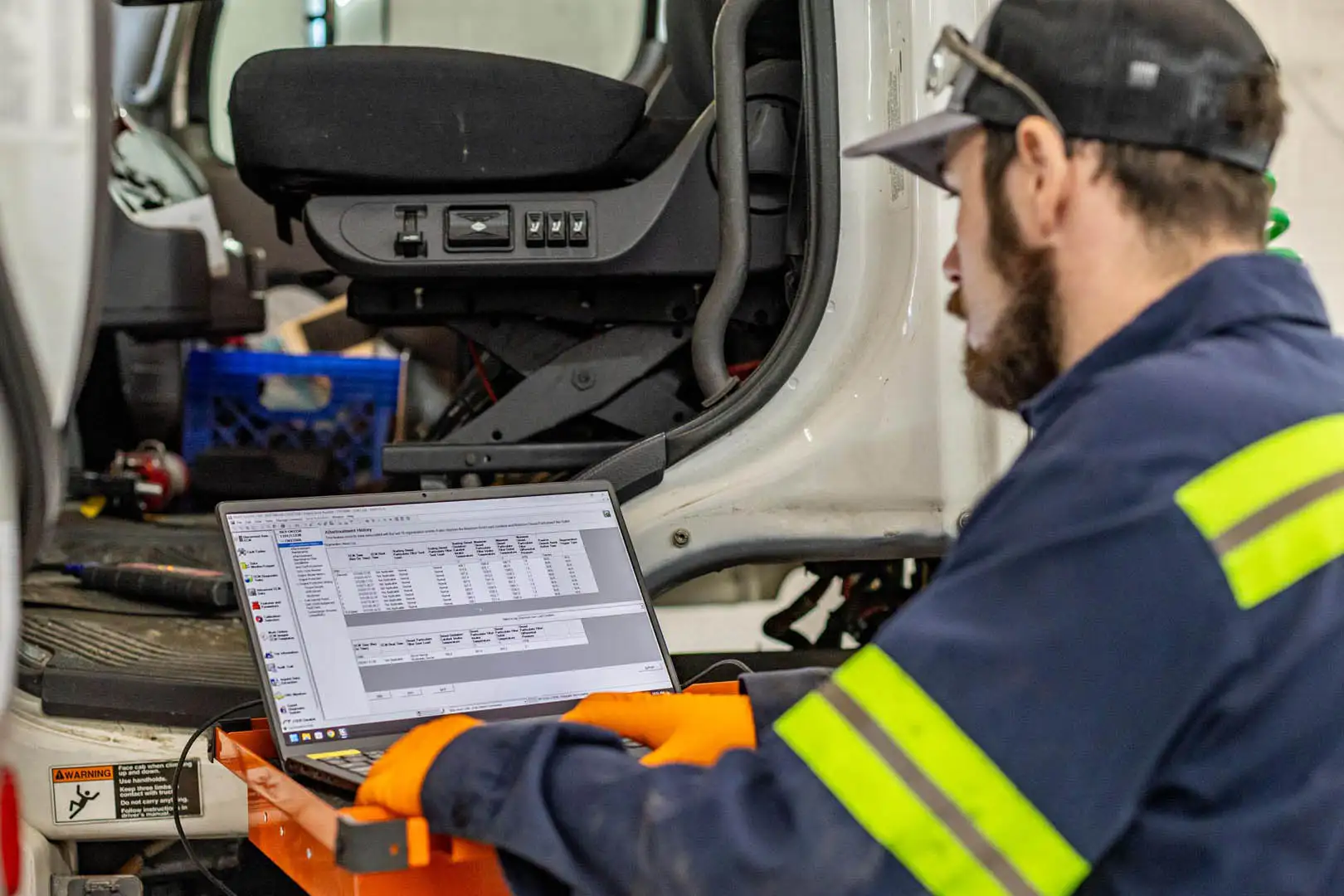
- Save fault codes with their full numbers and the tool or display that reported them.
- Note the date, approximate mileage, weather, load, and whether the truck was hot or cold.
- Bring recent repair invoices and describe any jump-start, battery replacement, or other work that preceded the problem.
Do not erase codes just to see whether the light returns before the appointment. Stored information can help establish the sequence of events. A code identifies a condition detected by a control system; it does not, by itself, prove which component should be replaced.
Agree on the Diagnostic Scope
Give the shop a reachable approval contact, a spending authorization if your business uses one, and the time the vehicle is actually needed. Ask how the initial diagnosis will be communicated and what requires further approval. Separate the immediate complaint from additional maintenance you want considered.
Do not recreate an unsafe condition for a video or road test. If there is a stop warning, loss of braking, severe overheating, smoke, or another immediate safety concern, stop safely and follow the vehicle manufacturer’s instructions.
After the Visit
Save the findings with the same unit’s history. If the symptom returns, report what is unchanged and what is different rather than starting a new, disconnected description. That continuity is especially useful when several drivers share a truck.
Need help investigating a fault? Explore computer diagnostics or send a service request with your vehicle details.
An Example of a Useful Report
“The truck starts normally cold, but cranks slowly after a fuel stop. It began before the battery replacement and happened twice afterward.” This example separates the symptom, operating condition, and repair history. Add the actual unit details and warning photos; do not copy a diagnosis from another truck’s report.